Inclusion doesn’t always come with a sign on the door. Sometimes, it’s something you feel the moment you walk into a room, a shared sense of belonging, a welcoming environment. That was the unmistakable feeling inside the audience at
Unlabeled Theatre Company’s production of Something Rotten. It was more than an entertaining night out. It was a reminder that inclusive spaces in the community already exist and that choosing to show up can be a powerful act of participation.
Conversations about inclusion often focus on systems, policies, or programs, and those things matter. But inclusion is also lived in smaller, quieter ways. It happens when people gather, when creativity is shared, and when difference isn’t spotlighted as something separate, but woven naturally into the experience.
At this performance, inclusion was simply the atmosphere. The laughter, the applause, the collective focus on the stage; all of it was shared.
Unlabeled Theatre Company creates theatre that reflects the belief that the arts are stronger when more voices are present. Using their own unique model, an actor with a disability, or who is neurodivergent, is paired with a neurotypical “shadow partner”.
“Our artists can achieve a higher level of success with a model showing them the pacing, choreography and staging. By creating and performing a role together, in unison, our artists and shadow partners show our audiences what people with disabilities CAN do. This staging model also creates a unified vision of the world we wish to live in. Life is better, together.” -
Unlabeled Theatre CompanyUnlabeled Theatre Company creates theatre that reflects the belief that the arts are stronger when more voices are present. Using their own unique model, an actor with a disability, or who is neurodivergent, is paired with a neurotypical “shadow partner”.
“Our artists can achieve a higher level of success with a model showing them the pacing, choreography and staging. By creating and performing a role together, in unison, our artists and shadow partners show our audiences what people with disabilities CAN do. This staging model also creates a unified vision of the world we wish to live in. Life is better, together.” -Unlabeled Theatre Company
Inclusive spaces don’t just benefit the people they’re designed to welcome. They change everyone who enters them.
When people with disabilities are visible, active, and celebrated in community settings, on stage, at work, in classrooms, and in public life, it challenges outdated assumptions about who contributes and how. It shifts the narrative from accommodation to opportunity.
And perhaps most importantly, it makes inclusion feel normal. Not performative. Not exceptional. Just part of everyday life.
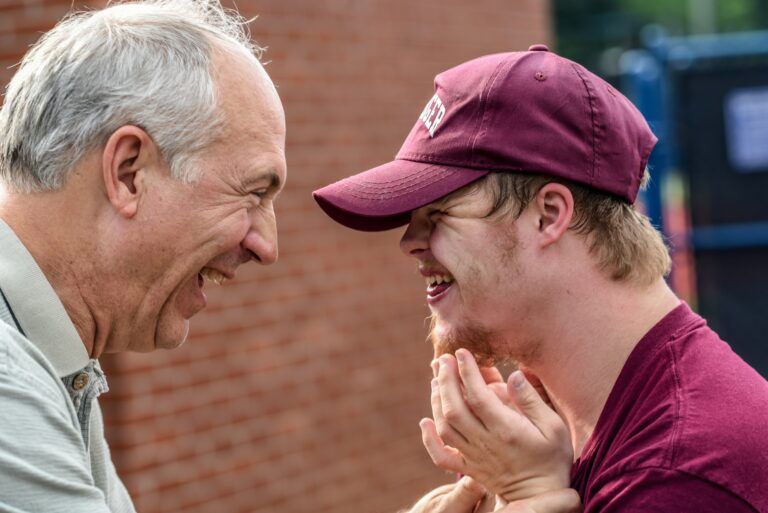
It’s easy to assume inclusion requires expertise, funding, or formal training. Sometimes it does. But sometimes, inclusion begins with a choice as simple as where we spend our time.
- Choosing to attend a local production
- Choosing to support organizations that reflect shared values
- Choosing spaces where difference isn’t just accepted but expected
Unlabeled Theatre Company is a living example of how any space can become inclusive when intention meets community.
At Unified Work, inclusion is often discussed in the context of employment: expanding access to skills, training, and meaningful work for people with disabilities. But the foundation of that mission is broader than any single program.
Inclusion is about access. Belonging. Dignity. Opportunity.
When communities embrace inclusive arts, they reinforce the same truth Unified Work champions every day: people with disabilities are not a separate audience or workforce. They are creators, contributors, colleagues, and neighbors.
Unlabeled Theatre Company’s next production,
Once Upon a Mattress, opens in May. It’s another opportunity not just to enjoy an evening of entertainment, but to participate in a community that models what inclusion can look like in real life.
Inclusion doesn’t always start with a policy or a plan. Sometimes, it starts with showing up.
The invitation is simple: notice and choose inclusive spaces in your everyday life.
Support local programs. Attend community events.
Share experiences where everyone is truly welcome.